

Improving Your Jiu Jitsu: When Physicality Becomes a Crutch
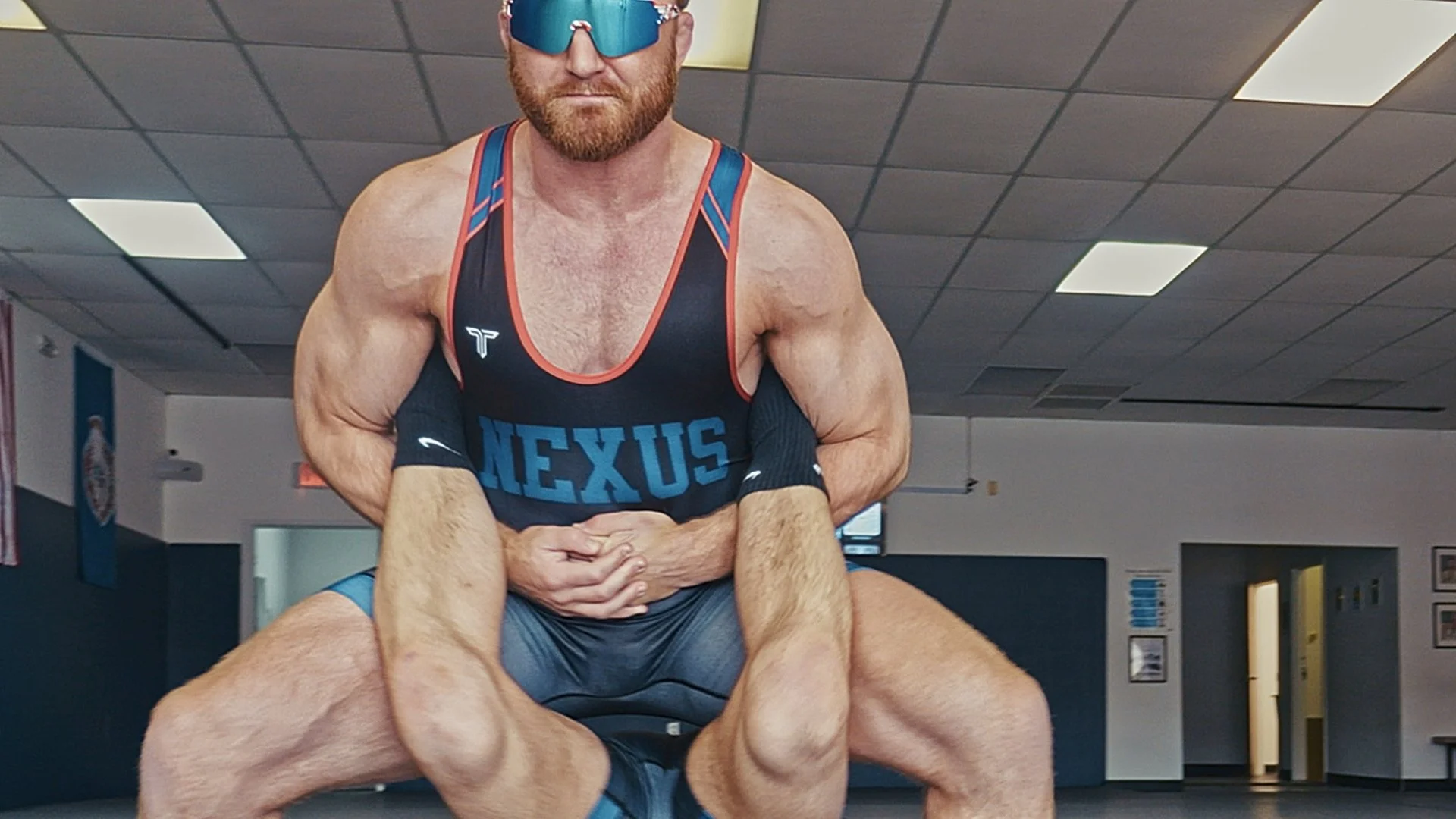
Every person who steps onto the mats at Nexus brings a unique set of physical attributes. Some are stronger, faster, more flexible, explosive, or naturally bigger than their training partners or opponents. These traits can be powerful advantages, but they can also hold your Jiu Jitsu back.
It’s easy to rely on what comes naturally. Strong athletes’ muscle through positions and fast athletes scramble out of danger. Flexible grapplers may recover their guard easier where others would get passed. In the moment, it works. You win rounds or even competitions. It feels like progress.
However, it is the same lie that people fall into with other fitness related activities such as Crossfit, power lifting, etc. Not every training session has to be finished dead on the floor in a pool of sweat. Pain, soreness and being tired is not always the sign of improvement. Jiu Jitsu is as much a mental and technical game as it is physical.
Physicality is temporary. It fades as you get tired within a round, across a long training session, and eventually with age. Technique, timing, and efficiency, on the other hand, are far more durable. Jiu Jitsu was built on the idea that leverage and skill can overcome size and strength, but that only happens if you develop those skills.
If you constantly use your physical attributes to fill in the gaps in your skill, those gaps never close. You don’t refine your timing if you can explode out of bad positions. You don’t sharpen control if you can just squeeze harder. You don’t clean up your technique if you can force it to work anyway. Over time, this creates a ceiling, one that becomes obvious the moment you face someone more technical who can neutralize your athletic advantages.
That doesn’t mean hard rounds don’t matter. They absolutely do, especially if you plan to compete. You need rounds where your training partners are giving full resistance, pushing the pace, and forcing you to deal with real intensity and exhaustion. That’s where you test your Jiu Jitsu under pressure and learn how it holds up when things aren’t controlled.
But not every round, or every training session needs to look like that.
Some of the biggest improvements in skill come when you intentionally slow things down and limit your physicality. When you take away strength and speed as options, you’re forced to rely on proper positioning, leverage, and timing. You start to notice details you’d normally skip. You feel where you’re off balance. You recognize inefficiencies instead of bulldozing past them.
It might mean you lose positions you’d normally dominate. As long as you are taking in that information and learning from it, that’s not failure, that’s refinement.
Training with this balance is key. Use hard rounds to test yourself and build toughness. Use controlled rounds to build precision and understanding. One without the other leaves you woefully incomplete.
Over time, you’ll notice a shift. Your Jiu Jitsu becomes more efficient. You’re calmer, you can think clearly, you start hitting moves with fewer steps and with less effort, regardless of how hard your opponent is going. Techniques begin to work not because you forced them, but because they were executed at the right time, in the proper way.
Physical attributes will always be part of the equation, and they can absolutely elevate your game. The goal is to reach a point where your skill does the heavy lifting, and your physicality simply enhances what’s already there. Because the highest level of Jiu Jitsu isn’t about who’s the strongest or fastest, it’s about who needs those things the least. Strength and attributes support good Jiu Jitsu, they don’t replace it.